Metaffordances and Art
A metaffordance approach to art asks not simply what an artwork means, but what possibilities for perception, thought, feeling, imagination, and action it makes available.
Traditional affordance theory focuses on direct action possibilities. A chair affords sitting, a path affords walking, and a handle affords grasping. Artworks possess such ordinary affordances as well. A painting hanging on a wall can be approached, viewed, touched, moved, or physically interacted with. However, these physical affordances capture only a small part of what art offers.
Art is fundamentally a metaffordance. It invites interpretation, emotional engagement, reflection, imagination, and social interaction. These interactions are not merely subjective experiences added by the viewer; they are real interactions with potentially significant emotional, cognitive, and behavioural consequences. A novel may change how someone understands the world. A painting may influence future decisions or values. A film may remain emotionally active in memory for years after it is seen.
The metaffordance of art therefore exists not as a simple action possibility available at a particular moment, but as an extended event unfolding through time. The encounter between artwork and viewer initiates a process of engagement that may continue long after the immediate act of perception. Meaning emerges through an ongoing interaction between the artwork, the viewer, their prior experiences, and the wider social and cultural environment.
Art as a Field of Metaffordances
Artworks create multiple layers of possibility.
Perceptual Metaffordances
Art invites particular ways of perceiving. An abstract painting may encourage viewers to search for patterns, shift between alternative interpretations, or discover previously unnoticed relationships. The artwork creates opportunities for exploratory perception that extend beyond simple visual detection. For example, a painting may afford seeing not just colors and shapes, but also emotional tone, symbolic meaning, cultural references, or the intentions of the artist. These perceptual possibilities are not fixed properties of the artwork, but emerge through the interaction between the viewer and the piece, influenced by the viewer's prior experiences, cultural background, and current context. I used the "Koffka Ring" illusion in my research to demonstrate the importance of context and how certain visual patterns can afford multiple perceptual interpretations, illustrating the dynamic nature of perception and the role of metaffordances in shaping what we see. It was used on the cover of my conference proceedings book for ICPA (Treffner, 2003).
Emotional Metaffordances
Art affords emotional exploration. A painting, poem, or piece of music may enable grief, nostalgia, joy, wonder, fear, or hope. These emotional possibilities arise through interaction with the artwork and may continue to influence future thoughts and actions long after the initial encounter.
Imaginative Metaffordances
Art frequently serves as a platform for imagination. Novels, films, paintings, and performances allow people to explore alternative worlds, inhabit different perspectives, rehearse possible futures, and consider possibilities that do not exist within immediate physical reality.
Social and Cultural Metaffordances
Art creates opportunities for communication and collective meaning-making. It affords conversation, disagreement, shared identity, remembrance, celebration, and cultural continuity. Through engagement with art, individuals connect not only with the artwork itself but also with communities, traditions, and historical narratives.
Music as Resonance to Metaffordances
Art and music also operate through resonance, in which an encounter continues to re-activate itself across
time. A musical phrase, visual motif, or tonal quality may return later in memory, not as a static
recollection but as a re-lived pattern of feeling, perception, and meaning. This resonance is not located
solely in the artwork or in the viewer, but in the coupling between them that can be re-engaged repeatedly in
different contexts. In this sense, music and art do not simply produce effects at the moment of perception;
they establish stable patterns of potential re-activation, where meaning and emotion can be re-invoked by
later experiences, environments, or internal states. Resonance is therefore a key mechanism through which
metaffordances extend themselves across time.
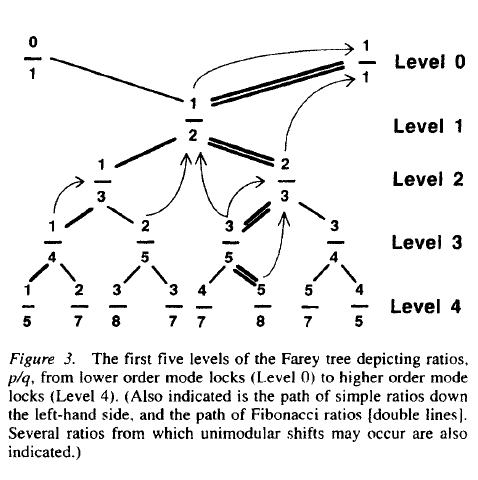
My own research on human motor
coordination explicitly used the mathematical "higher order invariants" of ratios or "resonances" underlying
physical rhythm - and musical scales - to explain how
people synchronise their bodies and limb movements in time with each other and with music. This work was based
on the idea that perception of rhythm is not a matter of detecting discrete events, but of perceiving the
underlying structure of temporal relationships that can be re-activated across time
(Treffner and Turvey, 1993).
Epistemic Metaffordances
Art can provide new ways of knowing. It enables people to notice previously unseen aspects of experience, question assumptions, and explore ambiguity. Art often reveals possibilities for understanding that are inaccessible through purely analytical or propositional forms of knowledge.
The Artist as a Designer of Metaffordances
From this perspective, artists do not simply create objects. They create structured opportunities for engagement. The artist shapes a landscape of possibilities that influences what viewers may perceive, imagine, feel, understand, and eventually do.
An artwork therefore functions as more than a physical artefact. It is a metaffordance that allows viewers to perceive and act upon affordances that would not be available in the physical object alone. It enables engagement with symbolic meaning, emotional experience, intellectual exploration, the intentions of the artist, and the cultural context in which the work exists.
Why Art Matters
The value of art lies not only in representation or aesthetic pleasure, but in its ability to expand the space of possible human experience. Art creates opportunities for new forms of perception, understanding, imagination, and action. Through these processes it changes what people can notice, what they can think about, what they can feel, and ultimately what they can become.
Affordances change what we can do. Metaffordances change what we can become. Art is one of the most powerful metaffordances because it transforms a moment of perception into an ongoing process of engagement that unfolds across time.
Related ideas

Paul Treffner
metaffordance.com