Metaffordance
VIDEO INTRODUCTIONS
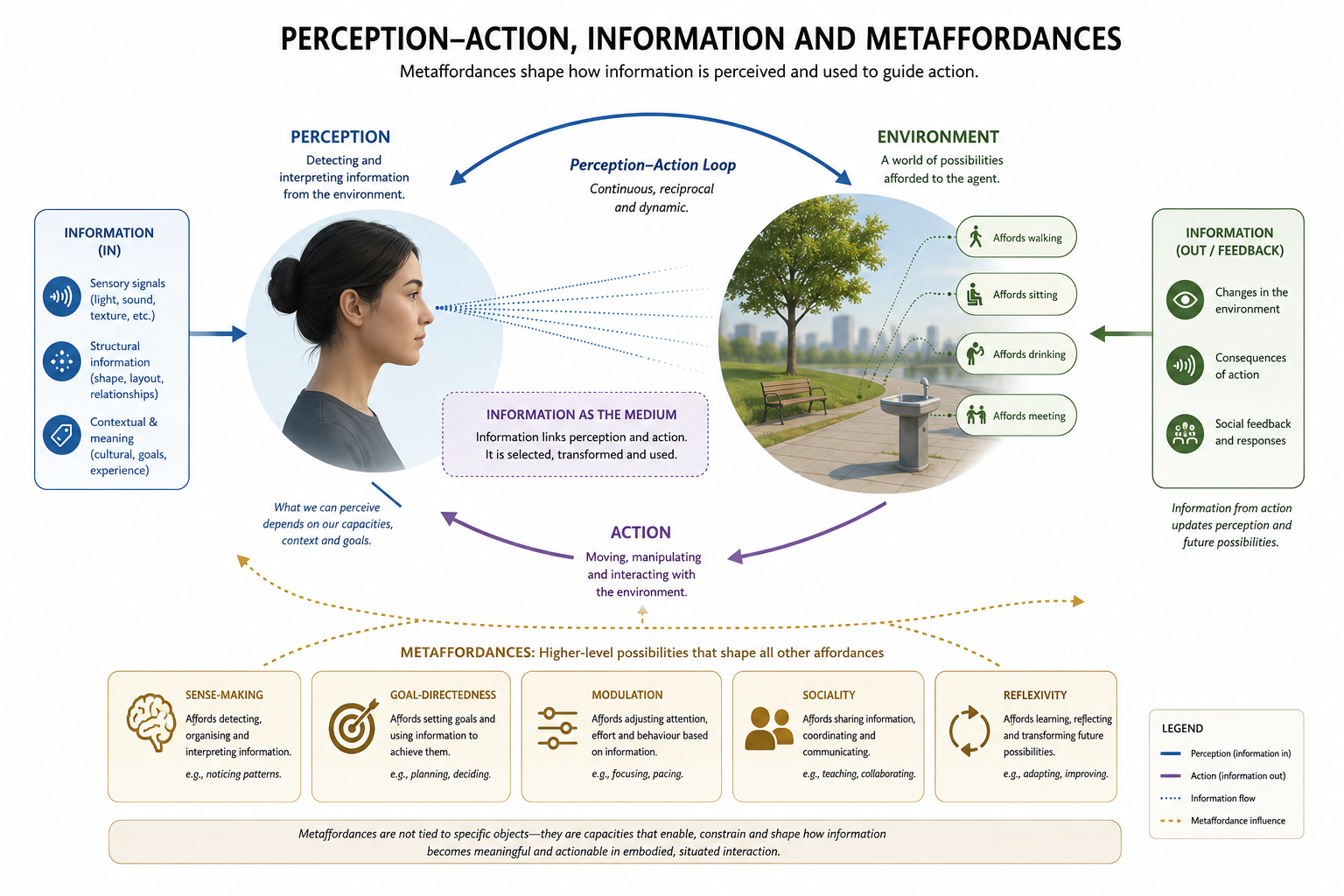
Short video (7 mins) on how strategic thinking is enhanced when a complex system is understood in terms of opportunities for action - the "affordances" and "metaffordances" of the human environment. This is especially applicable to complex organisations including governments, industry, and educational institutions.

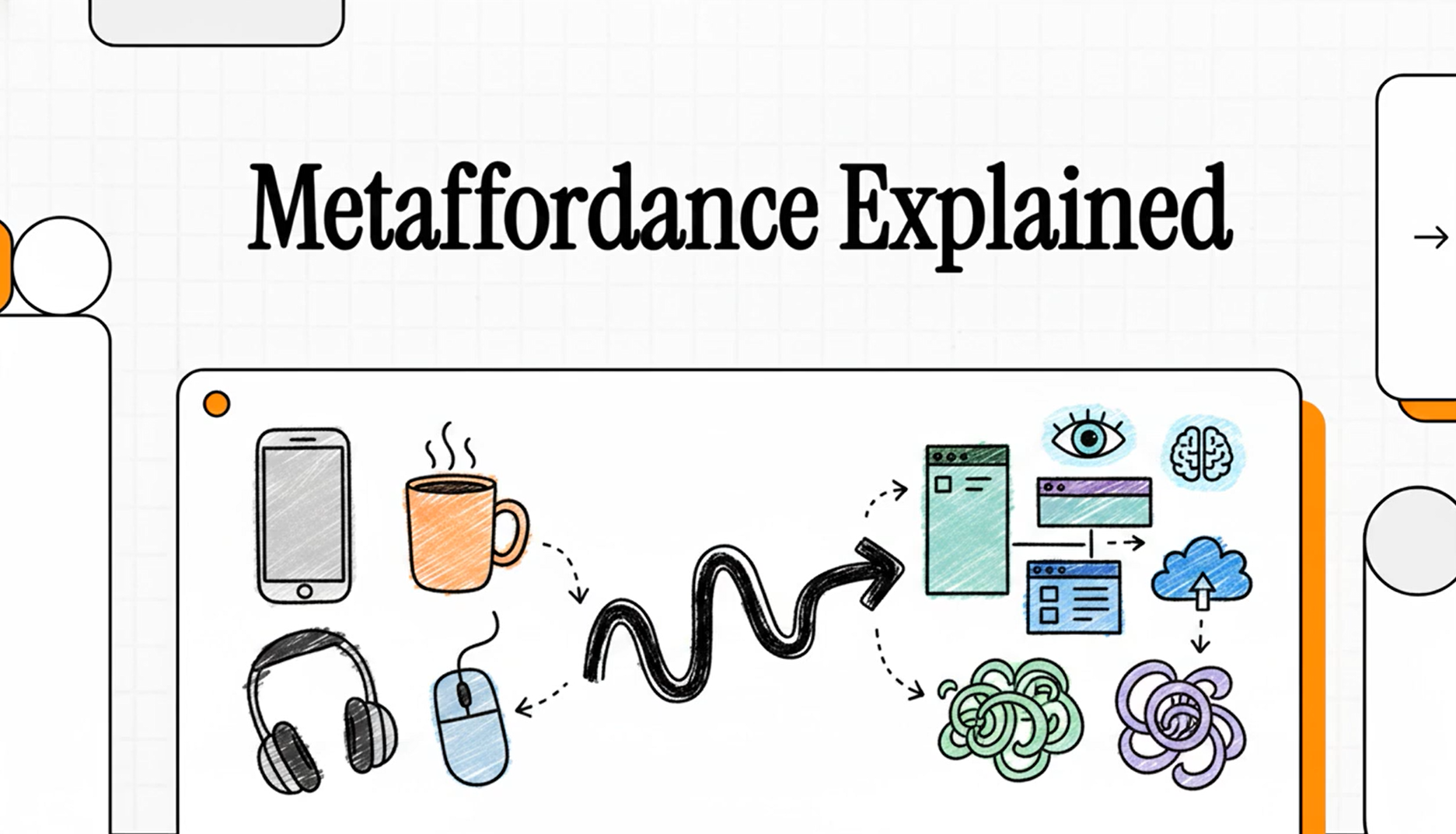
Short video (7 mins) explaining "affordance" and "metaffordance", and how thinking in terms of metaffordances can enhance our understanding of action and interaction.
Ecological Psychology
- Every environment offers or "affords" various actions to an organism
- Perception is seeing what actions are possible
- Properties of the environment that afford actions are called the "AFFORDANCE" properties
- Affordances must be perceivable properties — to enable learning and evolution to occur
- Perception is seeing affordances in the environment
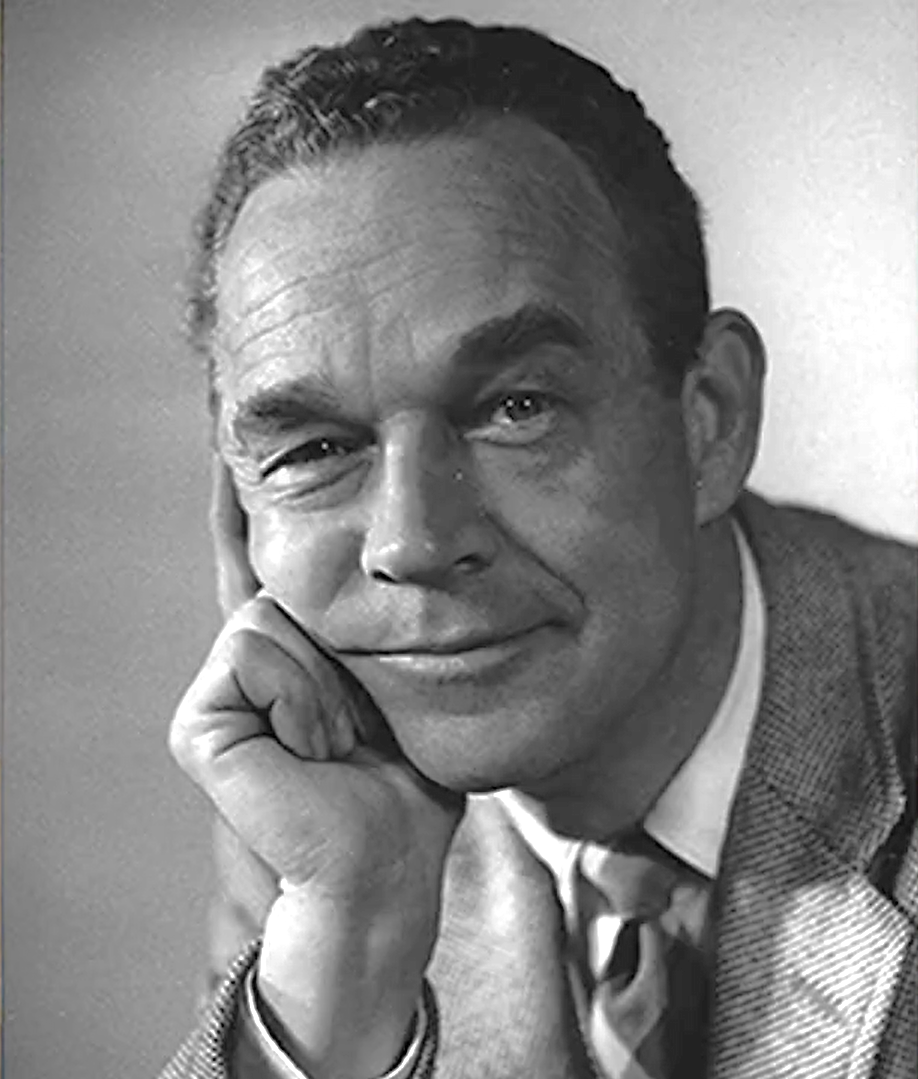
- The profound insight - that perception is of affordances - is due to James J. Gibson , widely considered the most significant perceptual psychologist of the 20th century. His 1979 book "The Ecological Approach to Visual Perception" is the foundational text in the field.
James Gibson - the origins of ecological psychology:
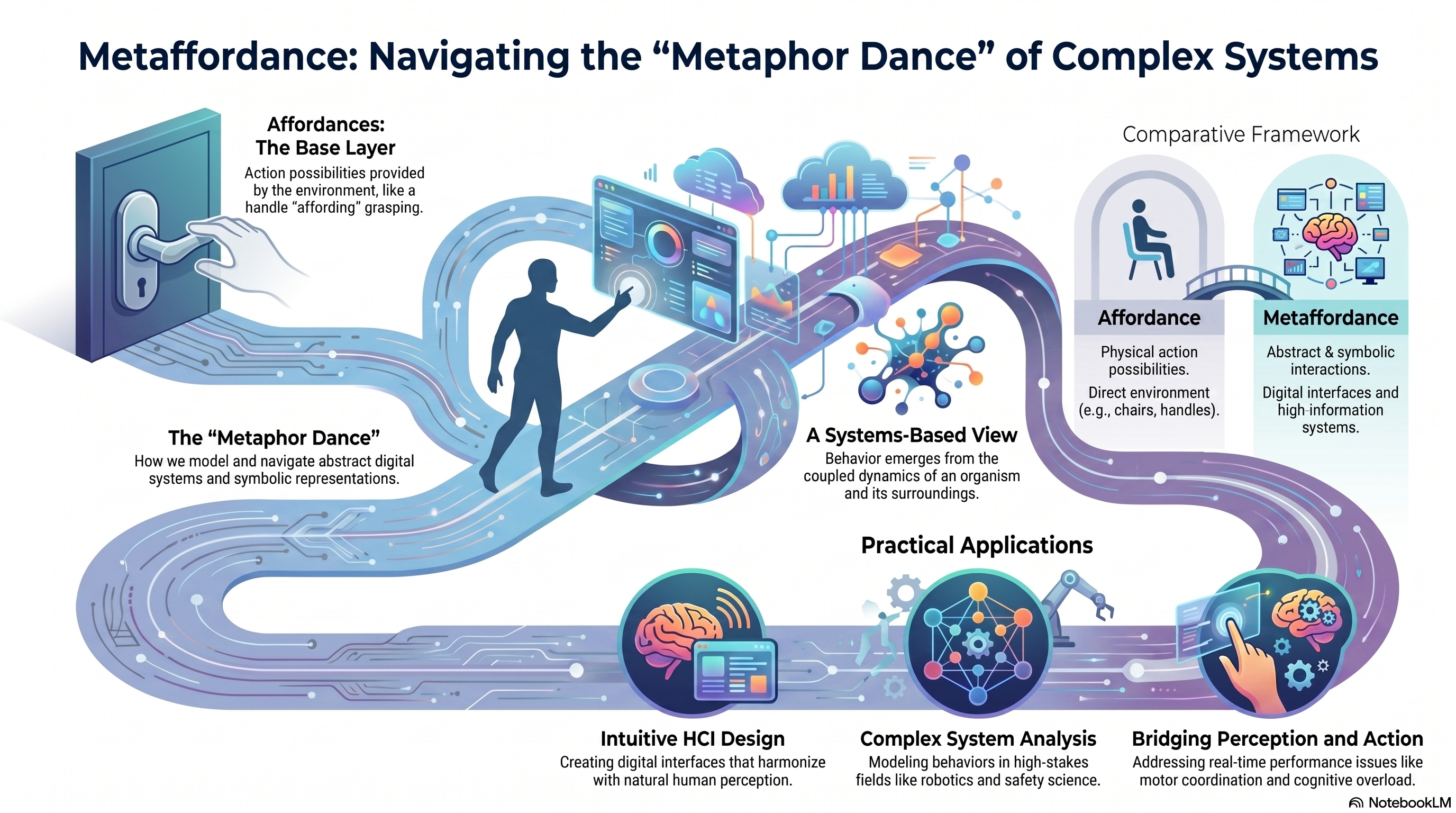
- Technology can enhance perception — visualising virtual affordances and virtual actions
- Visualisation provides affordances about affordances, or a "metaffordance"
- Metaffordance: an affordance about an affordance ("meta" affordance)
- Virtual/augmented reality technology is a metaffordance — a technology affordance that amplifies the original affordance
Affordances invite you to act…
Metaffordances invite you to INTERACT — they act back.
Visualisation with metaffordances is like a good dance…
Metaffordances enhance affordances; they enchant,
enlighten, and embody the act of visualisation (perceiving-acting using technology).
Background
“Metaffordances” are things or devices that allow creative interaction (“meta” = about; “affordances” = things that offer or afford actions).
An affordance is a perceivable property of the environment that offers possibilities for action.
The term was introduced by the renowned American experimental psychologist James Gibson.
Affordances
We see objects in terms of what actions they allow or afford.
A chair may afford:
- sitting on
- standing on
- lifting up
- moving around
Which affordance we perceive depends on intention and context. Perception is therefore fundamentally tied to action.
Ecological psychology proposes that organisms directly perceive meaningful opportunities for action through structured information in the environment.
Rather than first interpreting meaningless sensory inputs and then reasoning about them, we directly perceive what actions are possible.
Perception is therefore ecological: it depends on the fit between organism and environment.
Metaffordances
A metaffordance is a higher-order affordance: an information tool that not only allows action, but generates new information about action and interaction.
Metaffordances do not simply invite action — they invite interaction. They respond.
Metaffordances amplify information about affordances. Their responsiveness enhances human capability beyond ordinary tools.
Examples
1. Pencil
A pencil affords grasping; the affordance is graspability. But it is also a metaffordance with higher-order affordances that allow marking, drawing, writing, and communication. As with first-order affordances, metaffordances depend on the larger context of the environment and the abilities and intentions of the user. A pencil can be used to write a novel...or simply poke someone.
2. Mobile phone
A mobile phone affords holding and manipulation, but functions as a metaffordance for remote conversation, remote collaboration, and information exchange between distant users. The metaffordance of a mobile phone allows users to perceive and act on social affordances that would not be available in face-to-face interaction, such as the ability to share images, use emojis, and interact across distances.
3. Video Conferencing
A video-enabled computer is a metaffordance for distributed group interaction and collaborative discussion. It affords not only communication but also the co-creation of shared understanding through visual and verbal interaction. The metaffordance of video conferencing allows users to perceive and act on social affordances that would not be available in face-to-face interaction, such as the ability to share screens, use virtual backgrounds, and interact with a larger group of people across distances.
4. Augmented reality
Augmented reality systems amplify interaction with the environment by overlaying context-sensitive information onto real-world objects. Games such as Pokémon Go create virtual interactions...with real behavioural consequences in the physical world. The metaffordance of augmented reality allows users to perceive and act on affordances that would not be available in the physical environment alone, such as the ability to interact with virtual objects, access location-based information, and engage in gamified experiences that blend the virtual and physical worlds.
5. Surgical robots
Surgical assistive robots enhance the surgeon's precision by combining the surgeon's manual dexterity and control with real-time sensing, force feedback, and constrained movement. They can create a virtual wall with force-feedback preventing the surgeon's hand and scalpal from slipping or cutting too far. These systems do not replace the surgeon; they amplify human skill through dynamically generated information and interaction. The metaffordance of surgical robots allows surgeons to perceive and act on affordances that would not be available with traditional surgical tools, such as the ability to perform minimally invasive procedures, access hard-to-reach areas of the body, and receive real-time feedback on tissue properties and instrument positioning.
6. Art
Consider a painting hanging on a wall (or a movie on a movie screen). It has basic affordances related to
action (lifting, touching, viewing, etc.). But it is also a metaffordance
and invites interaction, interpretation, and emotional response.
These are real interactions with emotional/physical consequences for the viewer,
potentially
in the distant future, even though they are not
simple physical actions at the moment of viewing. The painting is a metaffordance that invites interaction
with the
viewer's mind and emotions. The event of viewing the art work means the metaffordance
exists
as an extended event (in time), not as a simple action possibility. The metaffordance of art allows
viewers
to perceive and act on affordances that would not be available in the physical artwork alone, such as the
ability to engage in emotional and intellectual interaction, perceive symbolic meaning,
and
connect with
the artist's intentions and cultural context.
More on art under Ideas: Metaffordances and
Art.
7. Artificial Intelligence
AI systems such as ChatGPT are metaffordances that allow users to interact with vast amounts of
information
and
generate new content. They do not simply afford access to data; they afford interaction with the
information
itself, enabling users to ask questions, receive explanations, and co-create text, images, and code. The
metaffordance of AI reshapes how we perceive and interact with information, creating new possibilities for
learning, creativity, and problem-solving.
More on AI under Ideas: Metaffordances and
AI.
8. Agentic AI
Agentic AI systems extend the metaffordance further: rather than responding within a single
exchange, they pursue a goal across a stretch of time on the user's behalf, chaining sub-actions and
resolving ambiguity without a human perceiving each step. This is delegated pursuit, not just
delegated interpretation, and it changes what needs to stay perceivable for the coupling to remain
safe and trustworthy.
More under Ideas: Agentic AI:
Metaffordances on Steroids.
- Visualisation tools
- AI tools
- Statistical analysis
- Health systems design
- Useability & HCI design
- Learning & development design
- Education & pedagogy
- Policy design
More about Metaffordance: About
Ecological Psychology journal: EP journal
Centre for the Ecological Study of Perception and Action: CESPA
International Society for Ecological Psychology: ISEP
ISEP conference 2003 - Treffner organised: History of ISEP – 2003 Pacific Rim meeting
New book on ecological psychology - open access: Ed Reed book
▶ Videos on affordances: PERCEIVINGACTING YouTube channel
Related ideas